
Why a Parked Car Can Become Dangerous
A parked vehicle can expose a dog to dangerous cabin conditions even when the weather outdoors feels comfortable. Sunlight, the car’s materials and restricted air exchange all affect how heat accumulates inside. Dogs in hot cars may be at risk in mild-looking weather, not only during an obvious heatwave. The Wirral and Cheshire Animal Welfare Guide is an independent information guide focused on informing readers about these risks.
Heat and ventilation
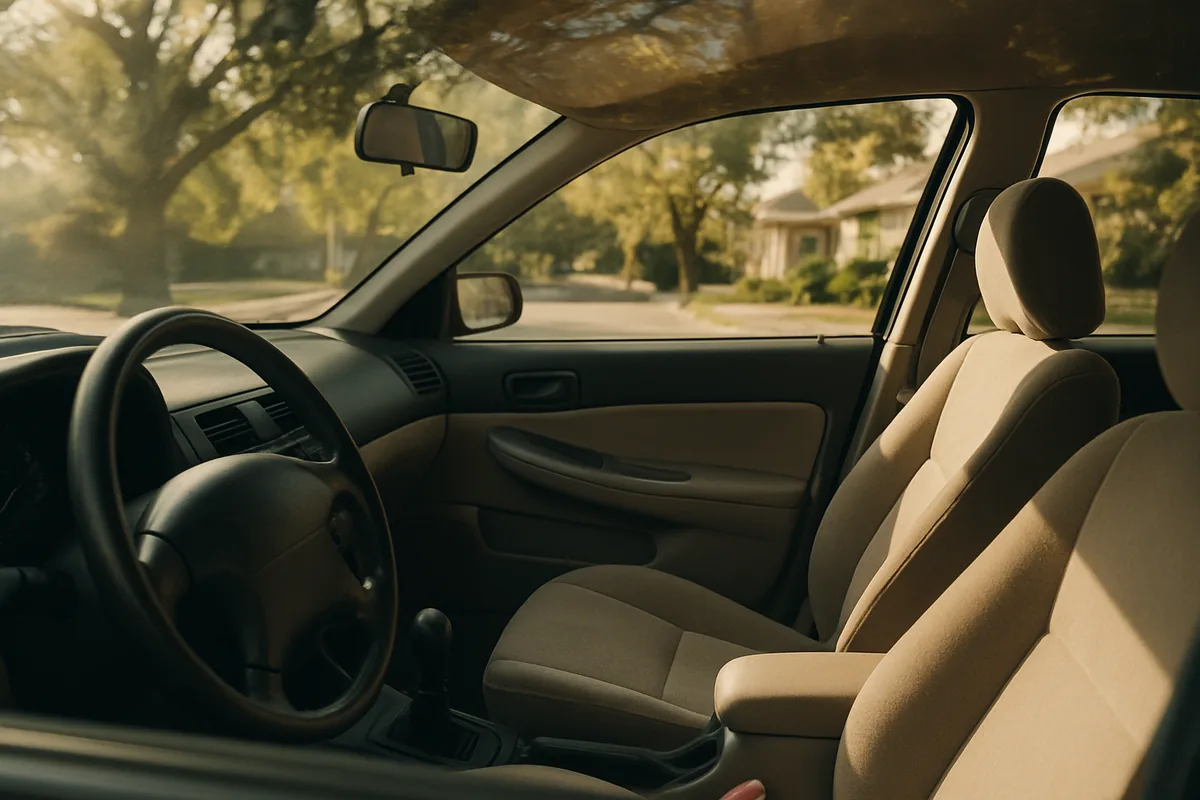
Sunlight passing through a vehicle’s windows warms the seats, dashboard and other interior surfaces. These materials absorb solar energy and release heat into the cabin, while the enclosed space limits the movement of warm air out of the vehicle. As a result, the temperature inside can rise above the outdoor temperature, even if the day does not feel exceptionally hot.
Car interiors also have a large glass area and relatively little air exchange when the doors and windows are closed. Without steady ventilation, hot air can accumulate rather than being replaced by cooler outdoor air. The effect depends on factors such as direct sun, cloud cover, vehicle colour and the cabin’s materials, so the same outdoor conditions can produce different results in different cars.
A dog cannot move away from the sun or choose a cooler room while confined in a parked cabin. The interior may become uncomfortable or dangerous while the surrounding air still seems manageable to a person standing outside. Treat the cabin itself, rather than the weather at the kerb, as the relevant environment when considering hot car safety for dogs.
Why open windows are not enough
A partly open window does not reliably prevent heat from building inside a parked car. A narrow gap allows some air exchange, but it does not create the steady, effective airflow needed to remove heat from the cabin. With little wind, or when air movement is blocked by nearby vehicles or walls, ventilation through the opening may be especially limited.
Opening windows on opposite sides may allow more air to pass through when a breeze is present, but the airflow can change or stop. It cannot be relied on to keep the cabin at a safe temperature as sunlight continues warming interior surfaces. The size of the opening, the vehicle’s design and its position relative to the wind all affect how much air moves; none makes conditions predictable enough for a dog left unattended.
Parking in shade is not a dependable substitute either. Shade can move as the sun changes position, and a shaded spot may still have warm, poorly ventilated air. A window left ajar may also leave a dog exposed to other hazards without solving the heat problem. A cracked window or shaded parking space cannot make leaving a dog unattended in a parked car safe.
Signs a Dog May Be in Distress
A dog’s breathing, posture and behaviour can change when it is struggling in a hot vehicle. Dog heatstroke warning signs may appear together or develop over time, and they can look different from one animal to another. A dog that seems unusually quiet may be just as concerning as one that is visibly agitated. Watch for changes from the dog’s normal condition, rather than relying on a single sign to judge its health.
Changes in breathing and behaviour
Heavy, rapid or unusual panting is one visible sign that a dog may be overheating, especially when it continues while the dog is resting. Panting and drooling in overheated dogs can occur together, but neither sign alone confirms heatstroke. Notice whether the dog appears restless, repeatedly shifts position, or seems unable to settle; these changes matter most when they are new or worsening.
Behaviour and strength can change too. A dog may move unsteadily, seem weak, respond slowly to a familiar voice, or appear confused about its surroundings. Some dogs become unusually subdued rather than restless, so a lack of agitation does not rule out a serious problem. The signs of heat exhaustion in dogs can vary with the individual and the circumstances, and appearance alone cannot establish a diagnosis.
Pay attention to the overall pattern: breathing that looks abnormal alongside weakness or a marked behaviour change is more concerning than a brief, mild change by itself. If the dog’s condition is changing, or you are unsure how serious the signs are, seek professional guidance promptly rather than waiting for a particular symptom to appear.
When the situation is urgent
Some visible changes warrant urgent attention, particularly when they are severe, appear together or worsen. Use the signs below to communicate what you can see; they cannot diagnose the cause of the dog’s condition.
| Visible sign | What you may observe | Concern and response |
|---|---|---|
| Vomiting | One or more episodes of bringing up food or fluid | Urgent concern, especially with other changes; contact an emergency or animal welfare service and a veterinary professional. |
| Marked weakness | Difficulty standing, walking, or keeping balance | Urgent concern; seek emergency or animal welfare help and veterinary assessment. |
| Confusion | Unusually slow or inappropriate responses, or seeming disoriented | Urgent concern, particularly if the dog’s condition is worsening; contact appropriate help and a veterinary professional. |
| Collapse | The dog falls or cannot remain upright | Emergency; contact an emergency or animal welfare service and a veterinary professional immediately. |
Do not wait for every sign in the table to appear. If you see collapse, pronounced weakness, confusion or vomiting in a dog exposed to heat, describe the specific signs and when they began when contacting help.
When a dog in a hot car shows severe or worsening changes, treat the situation as urgent: contact the appropriate emergency or animal welfare service and arrange veterinary assessment.
What to Do When You Find a Dog in a Hot Car
A clear sequence can help you respond to dogs in hot cars without adding risk to an already urgent situation. First assess the dog and the surroundings from a safe position, then contact the appropriate service for instructions. Give responders precise information so they can locate the vehicle and assess the situation. Remain nearby only when it is safe, and follow professional directions.
Assess the situation
Before moving closer, take a moment to check both the dog and the scene. Your safety matters: an accurate observation from a safe distance is more useful than rushing into danger.
- Check for moving traffic, poor visibility, unstable ground or other hazards around the vehicle; do not step into a road or block an active driveway.
- Look at the car’s position and surroundings, including nearby people, security staff or entrances where assistance may be available without approaching unsafely.
- Observe the dog through the glass without striking the vehicle. Note its posture, whether it appears alert, and any visible panting or drooling.
- Call to the dog calmly from outside and watch for a response, such as turning its head, changing position or reacting to your voice.
- Look for regular chest movement and whether the dog can stand or move normally; do not put your hands near the glass or reach inside.
- Notice weakness, confusion, collapse or difficulty responding, and tell the person you contact exactly what you can see rather than trying to diagnose the dog.
If the dog is unresponsive, struggling to breathe or unable to stand, treat the situation as urgent. Do not put yourself in danger to get a closer look.
Contact appropriate help
Once you have checked the immediate risks, contact the appropriate emergency or animal welfare service for instructions. Explain that you are seeking help with a dog in a vehicle and keep the line open if asked.
- For an animal in urgent distress, call the local animal welfare service or animal control, if available, and follow its instructions on the next safe step.
- If you cannot reach an animal welfare service promptly, contact the appropriate emergency service and explain the dog’s condition and why you believe help is urgent.
- If a person is in immediate danger, contact the emergency service responsible for that danger; do not rely on an animal welfare service to manage a threat to people.
- Give the exact location, including the street, nearby landmark, car park level or entrance, and the nearest safe place for responders to meet you.
- Describe the vehicle’s make, model, colour and registration number if visible, plus its position in the lot and which window or door is nearest the dog.
- Report what you observed, when you first noticed it, any change in the dog’s responsiveness or breathing, and hazards such as traffic or an unsafe crowd.
For urgent distress, ask the service to advise whether a veterinary professional should be contacted as well. Breaking into a vehicle can pose personal safety and legal risks; rules vary, so ask responders for direction rather than assuming what is permitted.
Stay nearby if it is safe
Remaining near the vehicle can help responders find it, especially in a large car park, but only if you can stand away from traffic and other hazards. Choose a visible, safe position and keep the vehicle in sight without leaning on it, blocking access or confronting anyone.
If another person is present, you can ask them to guide responders from a safe meeting point while you monitor the car. Do not let a growing crowd obstruct traffic, entrances or emergency access, and leave if the scene becomes unsafe.
Keep your phone available and follow the service’s instructions, including any request to move or provide an update. The safest response is to share clear observations, remain accessible when safe, and let trained responders direct the next step.
What to Do After the Dog Is Out
Once a dog is out of a hot vehicle, move quickly to reduce further heat exposure and keep activity to a minimum. A shaded, well-ventilated room or an air-conditioned space is preferable to a warm pavement or enclosed area. Cooling should be gradual rather than extreme, while veterinary advice is arranged. A dog that appears calmer after leaving the car may still need urgent assessment.
Move to a cooler place
Take the dog to shade or, if available, a cool indoor room with good ventilation or air conditioning. Keep the dog on a cool floor and away from direct sun; avoid making it walk farther than necessary, run, or struggle, as exertion can add to its heat load. If the dog is large or unsteady, ask another person to help move it without pulling on its neck or forcing it to stand.
Begin cooling with cool or lukewarm water, applied gradually to the coat and skin, and allow airflow around the dog. Do not use ice water, ice packs, or a cold bath: sudden, extreme cooling can cause additional problems and is not a substitute for veterinary care. Avoid wrapping the dog in a wet towel, which can hold warmth against its body. If it is alert and swallowing normally, offer small amounts of cool drinking water; do not pour water into its mouth or force it to drink. Keep the dog quiet and in the cooler place while you contact a veterinarian.
Seek veterinary advice
Contact a veterinarian or emergency veterinary clinic promptly if heat distress is suspected. Explain that the dog was in a hot vehicle, when it was found if known, and what cooling has been started. The clinic can advise whether to come in immediately and how to transport the dog; suspected heatstroke warrants urgent professional assessment rather than watchful waiting at home.
Do not assume the danger has passed because panting or agitation eases in a cooler place. Heat exposure can affect circulation and internal organs, and problems may not be obvious from the dog’s appearance alone. Tell the veterinary team about any weakness, vomiting, collapse, or unusual behaviour you observed, along with any change since the dog left the car. Follow the clinic’s instructions and do not give medication unless a veterinarian specifically directs you to do so. Home cooling can help while care is being arranged, but it cannot determine whether treatment or monitoring is needed. If the first clinic is unavailable, call another emergency veterinary service rather than delaying advice. Prompt veterinary assessment is the safest next step after significant heat exposure, even when the dog seems to recover.
Preventing Heat Exposure in Cars
The most reliable way to protect a dog from heat in a car is to plan care before setting off. Build your journey around arrangements that do not leave the dog alone in a parked vehicle. Depending on the trip, that may mean arranging supervision, choosing a dog-friendly destination or leaving the dog at home. A clear plan also makes delays and changes to your schedule easier to manage.
Plan journeys
Before travelling, decide where your dog will be during every stop, appointment and change of plan. These options can help you avoid leaving a dog unattended in a vehicle:
- Arrange for a trusted adult to supervise your dog at home or accompany you, so care is covered while you attend appointments or run errands.
- Choose a route and schedule that avoid stops where the dog would have to wait in the car, including collecting food or making short visits.
- Take your dog with you when the destination welcomes dogs and you can keep them with you throughout the visit, rather than leaving them outside alone.
- Leave your dog at home when a familiar, secure space and suitable care are available for the length of your planned outing.
- Ask a friend, family member or trusted dog sitter to care for your dog if your plans involve places that cannot accommodate them.
Check your arrangements before leaving and have an alternative ready if a visit takes longer than expected. Choosing supervision, a suitable destination or a safe stay at home is more dependable than relying on a quick stop.
Avoid leaving a dog unattended
Conditions inside a parked car can change while you are away. The sun may move across the parking area, cloud cover can shift, and a stop intended to last a few minutes can take longer because of a queue or appointment. A space that was shaded when you parked may be exposed later, so shade cannot provide dependable protection for a dog left alone. Open windows do not make a parked vehicle a reliably safe place to leave a dog. They cannot ensure stable conditions, and airflow may vary as the weather and surroundings change. A brief stop is not a guarantee either: an unexpected delay can leave the dog unattended longer than planned. Do not use shade, partly opened windows or an estimated short absence as substitutes for supervision. If your plans require you to leave the vehicle, arrange for someone to stay with your dog or make another care plan before setting off. When neither option is available, leave the dog at home if it is safe and suitable. A supervised outing or a safe stay at home is the more dependable choice.