
Identify What You Have Found
A young bird’s appearance can help distinguish an early nest stage from the period when it is beginning to move beyond the nest. These stages call for different interpretations of what you observe. Feathering and movement are useful clues, but species and circumstances can change how a young bird looks and behaves. Consider its overall condition as well as its development when deciding what to assess next.
Nestling and fledgling
Feather coverage and movement offer useful clues when you find a baby bird, but neither settles its identity on its own. A nestling is generally at an earlier stage; a fledgling is feathered and developing the ability to move outside the nest.
| Clue | Nestling | Fledgling |
|---|---|---|
| Feathering | Little or no feathering; skin may be visible. | Most of the body is covered in feathers. |
| Movement | Usually has limited ability to move around. | It may hop, perch, or make short, unsteady movements while developing coordination. |
| Appearance | Often looks less developed and is associated with the nest. | May have a short tail or uneven-looking feathers despite being feathered. |
These are broad patterns, not a checklist with a single deciding feature. Species differ in how quickly feathers develop and how young birds move; a bird’s circumstances can also affect its appearance. If the clues do not clearly match either stage, treat the identification as uncertain rather than relying on one feature.
Why age and condition matter
Age clues help place a bird’s behavior in context: a very young bird may be unable to manage the same movements as one that is feathered and developing independence. Apparent condition matters too, because a bird that seems unwell or unusually inactive may need a professional assessment even if its age is unclear. Conversely, an awkward movement or an unfinished-looking plumage can be part of development, rather than proof of a problem. These observations are not a diagnosis, and appearance can vary between species. First consider the bird’s stage, then whether its overall state seems consistent with that stage. If either remains uncertain, seek an informed assessment before deciding what the bird needs.
When to Leave a Young Bird Alone
Finding a baby bird on the ground can be worrying, but its presence there does not always mean it has been abandoned. A fully feathered young bird may be at the stage of practising short flights and moving around outside the nest. Parent birds can remain close, even when they are not immediately visible. If the spot is safe, watching quietly gives them a chance to continue caring for it.
A fledgling on the ground
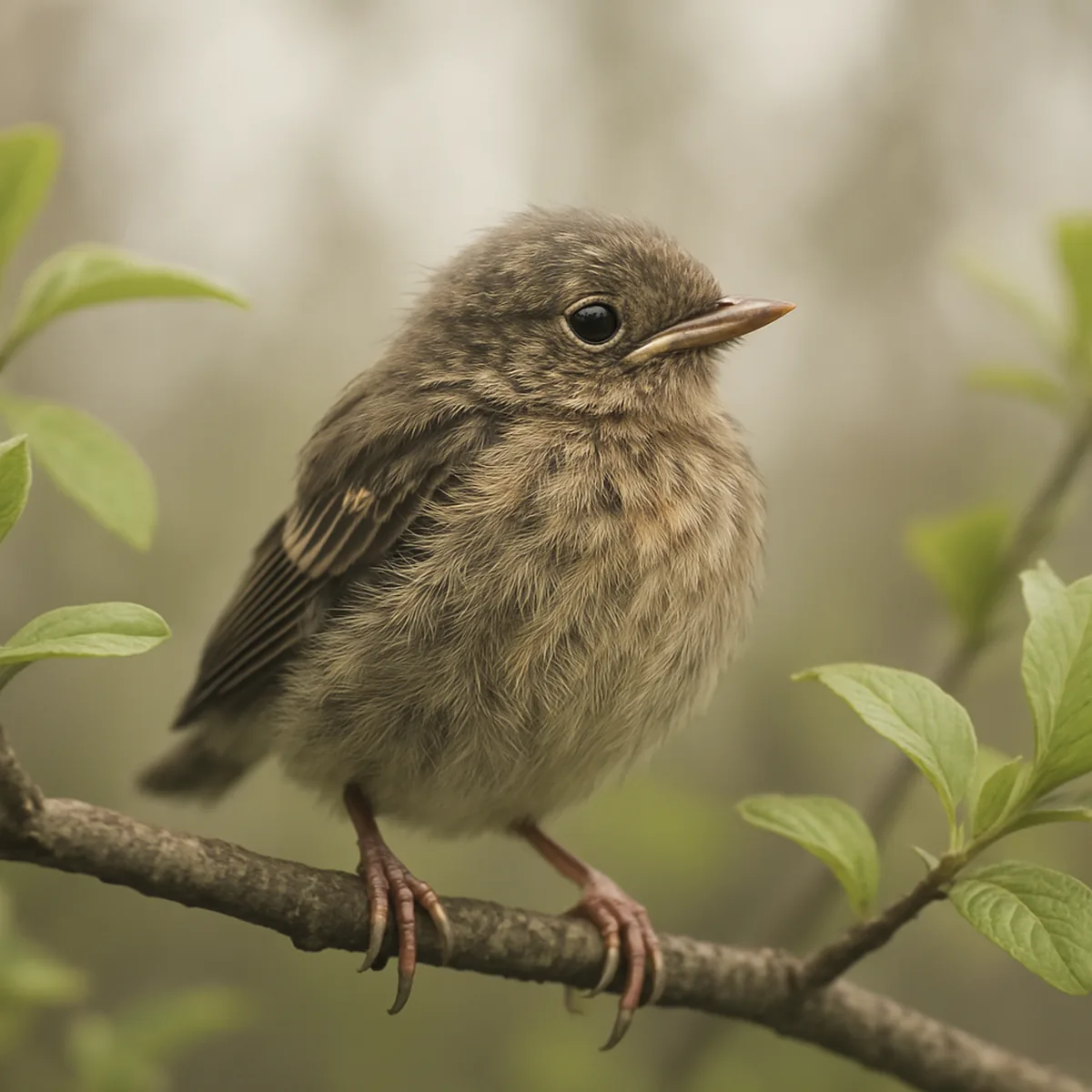
A fledgling may be fully feathered but still unsteady, with a short tail and limited flight. It may hop, perch low, or make brief attempts to fly as it builds coordination. Finding a fledgling on the ground can be a normal stage of leaving the nest; its parents may be nearby and continue bringing food while it develops.
Do not assume that an adult bird’s absence means the young bird has been left alone. Parent birds often keep their distance while a person is close, so quiet observation is more useful than approaching repeatedly. The situation changes if the bird is in immediate danger, such as on a road, beside a roaming cat, or within an active work area. In that case, the hazard—not simply the bird’s age or location—may make prompt action necessary. When the ground is safe, leave the fledgling where it is and allow its parents to reach it.
Watching from a distance
Choose a place where you can watch without crowding the bird or drawing attention to it. Use these checks to assess the scene:
- Stay several metres away and keep movement and noise low; if the bird reacts to you, increase the distance until it settles.
- Scan the immediate area for a road, predator, pet, or machinery that could reach the bird before its parents return.
- Note whether feathers cover the body, whether the bird stands or hops, and whether its wings hang evenly.
- Watch for alertness and movement, such as turning toward sounds, calling, hopping, or attempting a short flight.
- Look for adult birds approaching, calling, or carrying food, while remaining far enough away that they can come down.
Observe quietly for a period of time rather than repeatedly approaching to check; adult birds may wait until the area is calm before returning. If no immediate hazard is present, observation is the appropriate response; intervene only when the situation makes waiting unsafe.
When a Bird May Need Help
A young bird may need attention when it shows clear signs of injury or unusual weakness, or when its surroundings pose an immediate threat. These observations can help you decide whether to seek professional guidance, but they cannot establish a diagnosis. Some problems are not obvious from a brief look, and an unsafe location may make assessment difficult. If you are unsure whether the bird can be assessed safely, contact an appropriate wildlife professional or veterinary service.
Visible injury or weakness
Obvious bleeding, an open wound, a visibly damaged wing or leg, or a bird that cannot stay upright are reasons to seek professional guidance. These signs may be visible without touching or closely examining the bird; do not try to test a limb’s movement or decide how serious an injury is yourself.
Marked weakness can also be concerning. For example, a bird that remains unusually still, appears unable to hold its head up, or makes little response to nearby activity may need assessment. A short observation cannot show the cause, and a bird’s appearance alone does not confirm a particular injury or predict its outcome.
If you found a baby bird with an obvious injury, or its condition is difficult to assess safely, contact a wildlife professional or veterinary service and describe what you can see. Their guidance can help determine whether an assessment is needed.
Immediate environmental danger
A bird exposed to an immediate hazard may need professional guidance about the safest next step. Consider the specific danger and whether you can assess the situation without putting yourself or the bird at further risk.
- On a road or beside moving traffic, a bird faces the risk of being struck, especially where vehicles cannot see it in time to stop.
- Near a busy driveway, parking area, or path, repeated vehicle or foot traffic can create a direct collision or crushing hazard.
- Close to a cat, dog, or other animal actively approaching it, the bird may be at immediate risk of attack.
- At the edge of open water, in a drain, or in a container it cannot leave, the bird may be at risk of falling or becoming trapped.
- Among netting, wire, or other entangling material, a bird may be unable to move freely, and the hazard may make close assessment unsafe.
If the threat is immediate or the situation cannot be assessed safely, contact a wildlife professional or veterinary service for guidance. Professional assessment is warranted when injury, marked weakness, or an unresolved immediate hazard is apparent.
What to Do Before Professional Advice
If you have found a baby bird and think professional advice is needed, give the responder a clear account before taking further action. A brief description can help them judge the situation without repeated handling or unnecessary movement. Leave the bird where it is unless an immediate hazard makes that unsafe. If it is injured or you cannot assess the situation safely, contact an appropriate wildlife professional or veterinary service and follow their instructions.
Keep handling to a minimum
Unnecessary handling can cause stress and may worsen an already vulnerable bird’s condition. Observe from a short distance and share what you can see rather than picking it up to check.
- Give the exact location, such as a street or nearby landmark, and say whether the bird is on the ground, in a nest, or sheltered nearby.
- Describe the feathering as fully feathered, partly feathered, or mostly bare, using what is visible without lifting or turning the bird.
- Report observed behavior, such as whether it is standing, moving, calling, or remaining still; distinguish what you saw from what you are unsure about.
- Describe any visible injury, including where it appears to be, without touching the bird or trying to examine beneath its feathers.
- Mention nearby dangers, such as traffic, a cat, or a fallen nest, and explain whether the bird can remain undisturbed where it is.
If you need to call for help, give these details plainly and answer any questions without handling the bird again.
Do not offer food or water
Food and water are not a safe default response for a young bird. Its needs can vary with species, age, and condition, so a food suitable for one bird may be harmful to another. Bread, milk, seeds, and household scraps are not reliable substitutes for the bird’s natural diet and can cause harm. Do not pour or drip water into its beak: liquid can enter the airway. Avoid trying to feed the bird while you wait for advice, and do not guess at a food, amount, or schedule. Follow the instructions of a wildlife professional or veterinary service, who can advise you based on the bird’s circumstances. If you have already offered food or water, tell them what was given and when. Until you receive guidance, keep handling minimal and follow professional instructions.
Common Mistakes When Helping Baby Birds
A young bird found on the ground can prompt a natural urge to intervene. However, removing it from its surroundings may separate it from parental care that is still underway. Raising a wild bird also involves species-specific feeding and care that are difficult to provide without training. The better choice depends on whether it can remain undisturbed or needs a wildlife professional to assess it.
Taking a fledgling home
Taking a fledgling home is not the appropriate default when it is active and its parents may still be caring for it. Young birds often spend time on the ground as they develop flight skills, while adult birds continue to bring food and respond to their calls. A well-meaning rescue can interrupt that care and place the bird in an unfamiliar, stressful setting. It also removes the fledgling from the surroundings where it is developing movement and feeding skills. The situation is different if the bird faces immediate danger or appears to need assessment. In that case, do not assume that bringing it indoors is a substitute for expert help; contact a wildlife rehabilitator or veterinarian for direction. A bird that can remain safely where it is should generally be left undisturbed, while one in danger or apparently unwell needs professional assessment.
Trying to feed or raise it
Do not try to feed or raise a wild baby bird without guidance from a wildlife professional. Birds have different diets at different ages, and a food that seems suitable may lack the nutrients the species needs or cause digestive problems. Feeding technique matters too: forcing food can injure a small bird, and liquid offered directly into its beak can enter the airway. Even frequent well-intentioned feeding cannot replace the care provided by its parents or by someone trained in rehabilitation. Avoid recipes and feeding schedules found through guesswork, and do not offer food or water while waiting for advice. Instead, contact a wildlife rehabilitator for baby birds or a veterinarian and follow their instructions; they can advise whether the bird needs intervention and arrange appropriate care. If the bird is safe and behaving normally, leave it with its parents rather than attempting to raise it. If it is in immediate danger or may be injured or weak, seek professional assessment rather than starting home care.